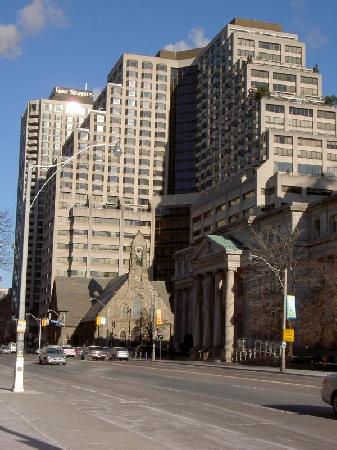
Language of Toronto The leading language of Toronto is English, even though both French and English are used as official languages. Most services are accessible in either of the two languages but you will also find Chinese, Italian, Greek and many other languages in Toronto.
These aren’t declared as official languages of Toronto, but there are thousands of people coming from different ethnic backgrounds in this Canadian city.
Although French is an official language in Toronto, it is not widely spoken in the city. The main reason why French was adopted an official language is because the rest of Canada speaks French. There are, however, not a lot of French people residing in Toronto, and there language and culture wouldn’t be found as common as any other culture.
You’ll find several places where people from different cultural background live. These places often have dual-language street names. Chinatown, Little Italy and Little Portugal are excellent examples of these. You’ll find a lot of small restaurants and pubs throughout Toronto where you can see different ethnic groups and their culture.
Seneca’s Tourism and Travel Diploma program is designed to provide you with an understanding of the skills, knowledge and attitudes required to work in the leisure, cruise and corporate travel sectors. Emphasis is placed on developing and honing your marketing, professional selling, negotiation, computer reservation, and tourism geography skills. You will study and work in the Seneca uniform. By living this standard each day, you'll become practiced in formal, occupation-specific presentation, and prepare for the real world*. Best of all, as a student of the Travel and Tourism program, you will gain 150 hours of valuable field placement work experience as well as an opportunity to take an optional coop placement. Prior to graduation and launching your professional career you will write the Canadian Institute of Travel Counsellors’, Travel Counsellor Certification*.
The City of Toronto is proud to play a vital role in the cultural life of the city. Committed to the development of arts and culture in the City of Toronto, the Toronto Culture undertakes a range of responsibilities including:
the operation and administration of many museums, historic sites, performing and visual arts centres;financial support for cultural activity and individual artists;encouraging public art projects in both private and public developments; and
assisting a wide range of community arts organizations in accessing and sharing municipal services and facilities.
Central to the mandate of the Toronto Culture is:
promoting the development of arts, culture and heritage throughout the City;
ensure accessibility to a variety of cultural activities that enhance the cultural attractions of the Toronto Region; and
providing direct cultural services through its museums and historic sites, and supporting the entire cultural sector of the community.
Toronto a une multitude de quartiers ethniques, y compris Greektown (où l'action continue jusqu'à façon après minuit), la Petite Italie, Corso Italia, 3 Chinatowns, Korea Town, la Petite Pologne, Little India, le Portugal Village. D'autres communautés ethniques se rassemblent également dans certaines parties de la ville et vous pouvez explorer juif, russe, ukrainien, somaliens et de nombreux autres restaurants et magasins. Là, vous pouvez naviguer pour la nourriture, la mode ethnique et l'art de loin les lieux et vérifier délices du monde entier à Toronto plus de 7000 restaurants.
Toronto (connu aussi sous les noms familiers Ville Reine ou Hogtown) est la capitale de la province de l’Ontario au Canada. L’Assemblée législative de l'Ontario y siège dans les édifices parlementaires situés dans le centre-ville à Queen's Park.
Avec plus de 2, 5 millions d'habitants.
En tant que capitale économique du Canada, Toronto est une ville de classe internationale, ainsi qu'une des villes financières les plus importantes dans le monde. C'est une ville mondiale classée alpha.
Les secteurs économiques les plus importants sont la finance, les télécommunications, le secteur aérospatial, les transports, les médias, les arts, le cinéma, la production de séries télévisées, la publication de documents, l'informatique, la recherche médicale, l'éducation, le tourisme et les sports. La majorité des entreprises canadiennes ont leur siège social dans la ville, ainsi que la Bourse de Toronto, la septième plus grande au monde sur le plan de la capitalisation boursièreVoir le Classement mondial 2009 des bourses en termes de capitalisation...
Toronto est une ville multiculturelle et moderne dont 49% de la population est née à l'extérieur du Canada. La lingua franca a toujours été l'anglais, mais une centaine d'autres langues sont parlées. 50 % des habitants de la ville ont une langue maternelle différente et 32 % parlent à la maison une langue autre que l'anglais.
Description above from the Wikipedia, licensed under CC-BY-SA full list of contributors
here.